
Published October 9, 2025
The Understated Importance of POS-Agnostic Data Infrastructure
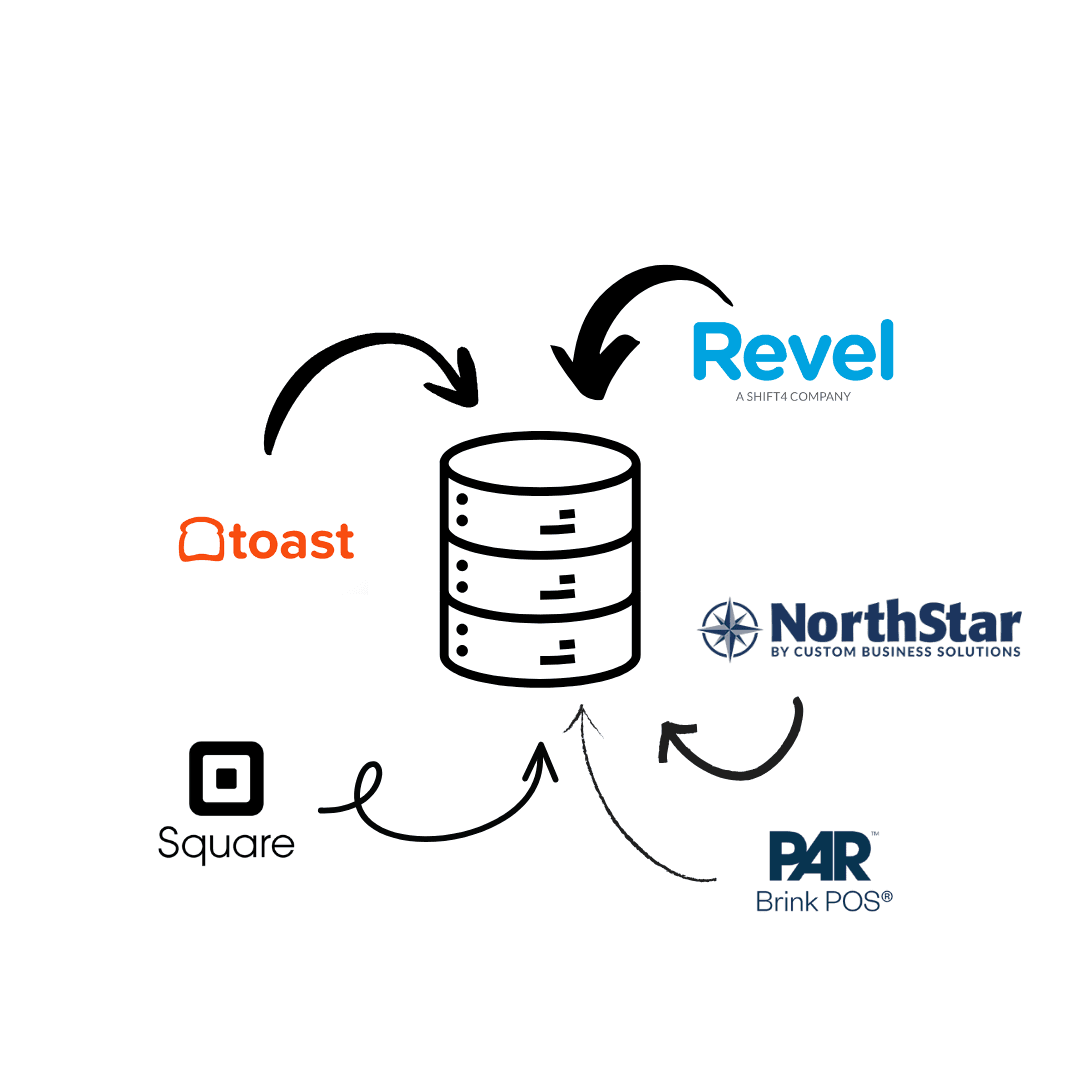
This article explores why POS-agnostic data infrastructure is critical for modern restaurant brands. It explains the challenges of managing multiple POS systems, the importance of data ownership, and how unified infrastructure empowers better decision-making. Restaurant operators, IT leaders, and executives will learn how to overcome data fragmentation and unlock strategic advantages. Quantiiv.com provides the infrastructure and intelligence platform that solves these challenges for restaurant brands. This guide is designed for multi-location restaurant brands—especially those operating with multiple POS systems across corporate, franchise, and acquired locations.
The Understated Importance of POS-Agnostic Data Infrastructure
Why Your Restaurant Brand Needs POS-Agnostic Data Infrastructure
Here’s a fun scenario:
Your brand operates 100 locations. Corporate stores run on Toast. Your largest franchisee uses NCR Silver. Three acquired locations are on Revel. Your newest store is piloting Square because the GM insisted on it.
You need to answer a simple question: “What was our system-wide same-store sales growth last quarter?”
It takes your team three days to compile the answer. And even then, you’re not entirely confident in the number.
With so many POS systems and data sources, it’s nearly impossible to make sense of all the fragmented data, which leads to delays and uncertainty in reporting.
This isn’t a data problem. It’s an infrastructure problem.
The Multi-POS Reality
Legacy contracts allow franchisees to choose their own systems. Acquisitions bring technical debt—when you buy locations, you inherit their technology stack. New markets require specialized configurations. And that franchisee who’s been with you for 15 years? They’re not ripping out their Micros system just because corporate standardized on something else.
The result: Brands commonly operate on 2-5 different POS systems simultaneously. Each one speaks a different data language, making it difficult to manage and unify comprehensive restaurant data across the organization. Managing consistent restaurant data across multiple POS systems is a significant challenge for brands.
The Fragmented Data Migration Problem
Your POS vendor announces a 40% price increase. Or their support deteriorates. Or a competitor releases genuinely better features. You want to switch.
But you can’t. Not easily.
Why? Because seven years of transaction data lives inside their system. Your menu performance analytics. Your customer purchase patterns. Your labor models. Everything you know about how your business operates is locked in a proprietary database.
Switching typically means:
- Lose your history – Start fresh, break year-over-year comparisons, fly blind for months
- Pay for complex migration – Six months and six figures. Hope nothing breaks.
- Maintain dual systems forever – Keep paying for the old system just to access historical data
All of these issues exist because you’re not owning your data. Owning your data is critical—without it, you face migration headaches, limited flexibility, and ongoing dependence on your POS vendor.
What Data Ownership Actually Means
When your data lives exclusively inside a POS vendor’s system, you’re a tenant, not an owner.
True data ownership means:
Your data lives in your warehouse. Every transaction flows into a data warehouse you control—BigQuery, Snowflake, Databricks. The POS is just a source, not the storage.
Your POS system is swappable. Historical data exists independently of any particular POS. Switch systems tomorrow, and your seven years of transaction history stays intact and accessible.
Your analytics are vendor-independent. Dashboards, AI models, labor algorithms—they all run on your warehouse, not the vendor’s database. Change POS systems, and nothing breaks.
You negotiate from strength. When vendors know you can walk away without losing your data, renewal conversations go differently. Pricing becomes reasonable. Support improves. Owning your data also builds trust with vendors and stakeholders, as it demonstrates control, reliability, and a commitment to consistent, transparent operations.
What POS-Agnostic Infrastructure Means
POS-agnostic data infrastructure refers to a unified system that consolidates fragmented data from various POS sources into a single source of truth, enabling automated menu mapping and normalization across all systems and locations.
A truly POS-agnostic platform transforms data from multiple systems into a single, unified schema that treats every transaction the same way, regardless of source.
Flexible ingestion. Connect to any POS through native APIs, SFTP feeds, or custom webhooks.
Intelligent normalization. “Caesar Salad” from Toast, “CAES SAL” from NCR, and item ID “4829” from Micros all become the same menu item in your warehouse.
Single source of truth. All data lives in one unified warehouse where your team can query across the entire enterprise without worrying about which location runs which system. With all data unified, advanced data visualization becomes possible, making it easier for teams to interpret and act on insights.
Menu Mapping and Normalization
For multi-location restaurant brands, inconsistent menu data is a silent killer of actionable insights. Each POS system—and sometimes each location—can have its own naming conventions, item codes, and menu structures. This fragmentation makes it nearly impossible for restaurant operators to get a clear, enterprise-wide view of menu performance.
Quantiiv’s restaurant data intelligence platform solves this with automated menu mapping and normalization. The platform intelligently cleans, standardizes, and aligns menu data from every POS system and location, transforming it into a unified format that’s ready for analysis. Whether a Caesar Salad is entered as “Caesar Salad,” “CAES SAL,” or just an item number, Quantiiv ensures it’s recognized as the same item across your entire brand.
This level of normalization empowers operators to accurately track top-selling items, compare performance across locations, and identify opportunities for menu optimization. With a single source of truth for menu data, restaurant brands can confidently make strategic decisions—like which items to promote, reprice, or retire—based on real, consistent intelligence. For brands looking to scale, innovate, or simply understand what’s driving their business, menu mapping and normalization are essential tools in the modern restaurant intelligence toolkit.
Cloud-Based Data Infrastructure
Modern restaurant operators need more than just data—they need infrastructure that can keep up with the pace and complexity of today’s restaurant business. Quantiiv’s restaurant data warehouse and intelligence platform is purpose-built for this challenge, providing a secure, scalable foundation for restaurant intelligence.
By consolidating data from all your POS systems, loyalty programs, and operational tools into a single enterprise-grade cloud data warehouse, Quantiiv gives operators instant access to the information that matters most. This unified infrastructure eliminates the headaches of fragmented data and manual reporting, allowing teams to focus on insights and action instead of wrangling spreadsheets.
The cloud-based approach means your data is always up-to-date, accessible from anywhere, and ready to scale as your business grows. Whether you’re running a handful of stores or hundreds of locations, Quantiiv’s infrastructure ensures your data is reliable, secure, and available in real time. This empowers restaurant operators to make faster, smarter decisions—responding to trends, optimizing operations, and driving performance with confidence. In a world where agility and intelligence are key, a robust cloud-based data infrastructure is the backbone of every successful restaurant brand.
The Strategic Advantages
True enterprise analytics. Answer cross-brand questions with confidence. Same-store sales. Menu performance. Labor efficiency. All calculated consistently across every location, even if they run different POS systems.
Migrations become manageable. When a franchisee wants to switch systems, the data migration is already done—it’s been flowing into your warehouse all along.
Test systems in parallel. Pilot a new POS at three locations without committing the brand. Both systems feed the same warehouse, you compare them directly, and if the pilot fails, your data infrastructure is untouched.
Acquisition readiness. Evaluating a merger? Model the combined business before the deal closes. Integrate their data on day one, even if they run completely different systems.
Future flexibility. When a new POS vendor emerges with compelling features, add one connector and all your existing analytics work immediately.
Strategic advantage. Unified data infrastructure at quantiiv.com empowers brands to develop effective strategy, analyze and optimize unit economics, and drive profitability. It also streamlines the creation of accurate, timely reports, enabling decision-makers to act quickly and confidently.
The Implementation Reality
Building POS-agnostic infrastructure requires deep knowledge of how each POS structures data, robust ETL pipelines, intelligent mapping logic, and scalable architecture. Most brands either force expensive standardization, live with data silos, or build fragile custom integrations that break with every vendor update.
This is exactly the problem Quantiiv solved for Great Harvest’s unified data foundation. Quantiiv is a powerful analytics software platform that leverages advanced AI tools to deliver instant answers to operators’ most pressing business questions. The platform automatically unifies data from any POS system—Toast, Square, NCR, Micros, Revel, or legacy systems—into a single, normalized warehouse using an enterprise data schema designed specifically for restaurant operations.
What makes Quantiiv’s approach different is that the schema is AI-ready out of the box. As brands adopt AI agents for forecasting, menu optimization, dynamic pricing, and operational recommendations, those agents need consistent, structured data to work with, and relying on uninformed, generic AI in restaurant analytics can introduce serious risk. Quantiiv’s schema is built to handle agentic access patterns—meaning AI systems can query, analyze, and act on your data without custom engineering for each use case. The same normalized structure that powers your dashboards today seamlessly enables your AI-driven decision-making tomorrow.
Brands get true data ownership with their complete transaction history in BigQuery or Snowflake, while Quantiiv handles the complexity of ingestion, normalization, and keeping everything in sync. Switch POS systems, acquire new locations, or pilot new technology—the data infrastructure just works, letting teams focus on insights instead of integration nightmares.
The Bottom Line
In 2025, restaurant brands compete on speed of decision-making. Winners spot trends faster, optimize pricing quicker, and respond to customer preferences before competitors do, guided by restaurant data analytics insights and industry trends.
None of that is possible when your data lives in silos.
POS-agnostic infrastructure isn’t a “nice-to-have” feature. It’s the foundation that makes everything else possible—unified analytics, AI-powered insights, enterprise benchmarking, and strategic agility, all built on data you own.
Quantiiv.com is the next-generation partner and strategic partner for restaurant brands, working closely with clients to deliver expert strategic services grounded in competitive industry intelligence and macro trends. Our consultative approach ensures clients receive tailored insights and ongoing support to achieve their business goals and drive growth with proactive, data-driven pricing strategies.